

If you’ve spent time around horses, you’ve likely experienced a sudden sideways leap, a startled snort, or a spin when your horse spooks. “Spooking” is a natural survival mechanism for prey animals like horses, but it can be frustrating and even dangerous.
Understanding why horses spook and using gentle, thoughtful training can make all the difference in creating a calmer, more confident partner.
Why Do Horses Spook?
Spooking isn’t misbehaviour, it’s instinct. Horses evolved as prey animals, relying on their acute senses to detect potential threats. When something unexpected appears, their first response is often flight.
Why Is Flight the First Response?
The horse’s reaction comes down to how their brain processes fear. As prey animals, horses survived by running first and thinking later. When something sudden happens, sensory information is routed straight to the amygdala (the brain’s fear center), triggering the sympathetic nervous system. This puts the body into “fight, flight, or freeze” mode, but for horses, flight is the safest survival strategy (McGreevy & McLean, 2010). That’s why spooking can happen before the horse has time to assess what’s actually happening.
However, a horse’s response isn’t only about instinct – it’s also shaped by experience. Horses that have had positive, gradual exposure to new sights and sounds often learn that novelty doesn’t equal danger. On the other hand, a horse that’s been frightened or punished when spooking may become even more reactive. With gentle, consistent training, you can help rewire that response so curiosity and trust replace fear.
Common Triggers for Spooking
- Sudden movement or sounds (rustling bushes, dogs, traffic, flapping jackets)
- Unfamiliar objects (plastic bags, wheelbarrows, umbrellas)
- Changes in the environment (shadows, puddles, new jumps in the arena)
- Pain or discomfort (ill-fitting tack, gastric issues, musculoskeletal problems)
- Anxious handling or riding (tension from the rider can heighten a horse’s response)
Horses that spook frequently may not just be “nervous types”; their behaviour could be linked to stress, lack of confidence, or even underlying health issues.
Gentle Training Solutions for "Spooky" Horses
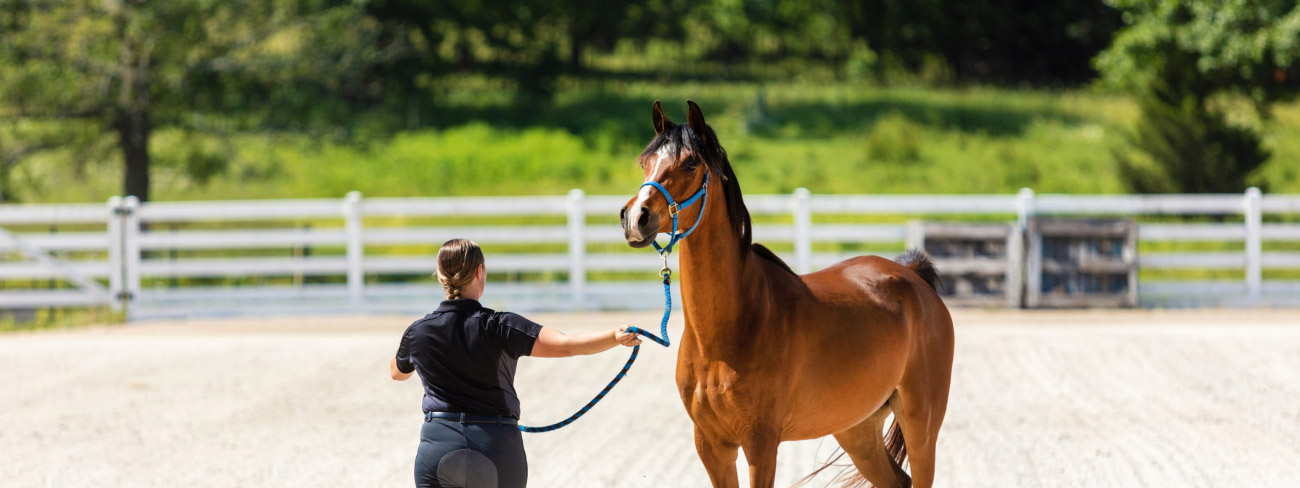
Punishing a horse for spooking often makes the problem worse, as it confirms to the horse that the situation is unsafe. Instead, gentle, trust-based approaches help the horse feel secure and learn to think rather than react.
1. Build confidence through gradual desensitization
Gradual exposure to scary objects can help horses realize new things aren’t threats. Start at a distance where your horse feels comfortable, reward calm behaviour, and allow them to approach at their own pace. NB: Refrain from putting the novel item on the horse’s back – this is counterproductive.
2. Strengthen your relationship
Horses look to their handlers for safety. Working on groundwork (calmly leading, walking over obstacles, following cues) and spending time with your horse doing nothing in particular all builds a stronger relationship so that your horse learns to rely on you when startled.
3. Focus on relaxation, not force
If your horse spooks under saddle or in hand, avoid yanking the reins or lead (do not punish). Instead, encourage forward movement, use a soft voice, and return to something your horse knows. Try to distract your horse from the situation with something they are familiar with. Calm repetition builds reassurance.
4. Keep sessions short and positive
Overwhelming your horse with too much too fast can create more anxiety. End on a good note, even if it’s a small step forward, so the horse leaves the session feeling safe.
5. Rule out physical causes (as much as possible)
Sometimes spooking is linked to pain or discomfort. Always ensure tack fits properly, and consult a vet or therapist if spooking suddenly worsens or comes with other changes in behaviour. Pain has been linked to increased reactivity and defensive responses in horses (Dyson, 2018)
From Fear to Partnership
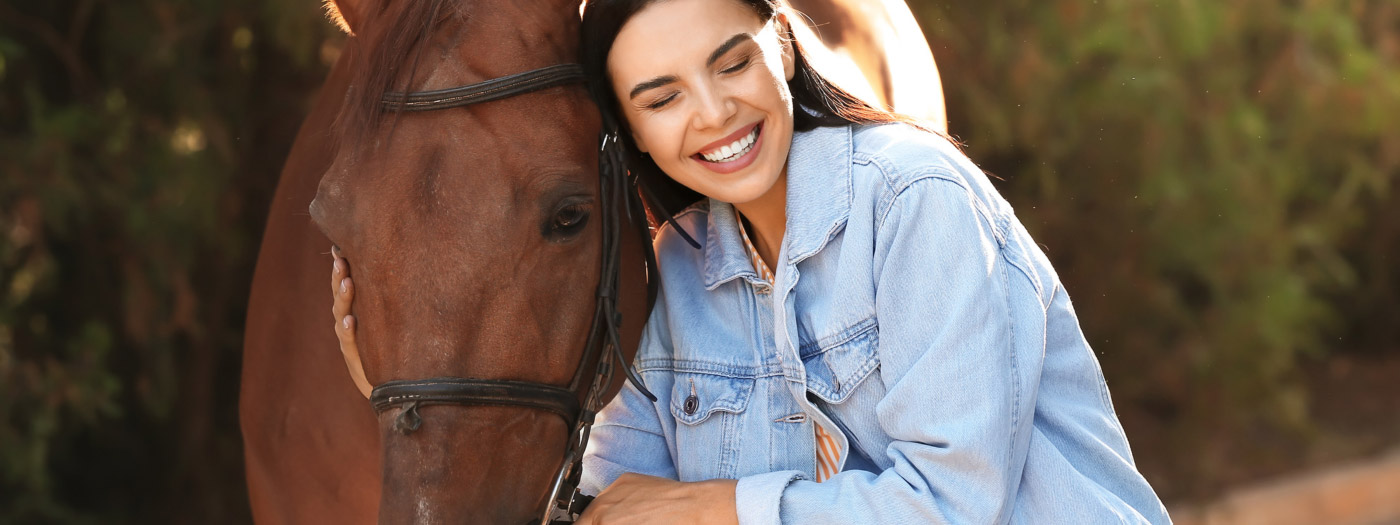
A spooky horse isn’t being “difficult”; they’re reacting the only way they know how. With patience, empathy, and gentle training, you can help your horse learn that the world is not so scary. Over time, spooking becomes less frequent, and the bond between you and your horse grows stronger!
At Gentled Animals, we believe in understanding and not overpowering our horses. If you’d like guidance on building a calmer, more connected partnership, get in touch today.