
Positive reinforcement is a term we hear constantly in animal training. But it is also a term that is frequently misunderstood or used incorrectly.
If you are a cat, dog or horse guardian, it is important to understand what positive reinforcement actually is, and, just as importantly, what it is not.
So simply, what is it?
Positive reinforcement means adding something the animal values immediately after a behaviour, which makes that behaviour more likely to happen again.
The important part is the function of the consequence: the behaviour must increase in the future.
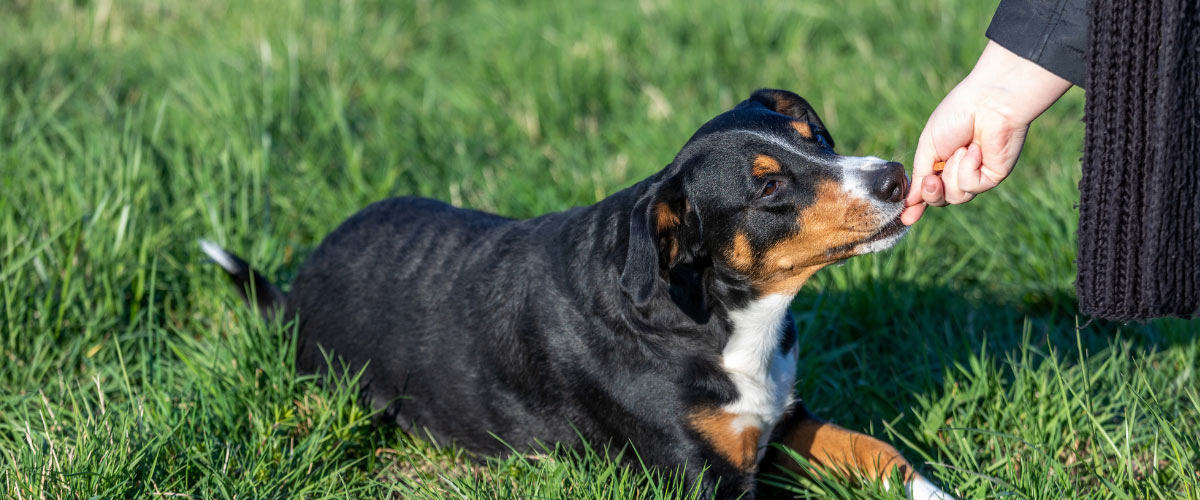
For example, if your dog sits and you give them a treat, and your dog becomes more likely to sit when asked in the future, the treat was a positive reinforcer.
“Positive” does not mean good, and “reinforcement” does not simply mean reward.
In behavioural science, positive = something is added, while reinforcement = the behaviour becomes more likely.
Why should you know about it?
Because understanding positive reinforcement allows you to make better, more ethical training decisions.
Instead of simply asking, “How do I stop this behaviour?”, we can ask:
“What behaviour would I like to see instead, and how can I make that behaviour worthwhile for the animal?”
This shifts training away from punishment and confrontation and towards teaching, communication and cooperation.
It also helps us understand that animals are not being “stubborn”, “dominant” or “naughty” simply because they aren’t doing what we ask. Their behaviour is influenced by their environment, their emotional state, their learning history and the consequences of their actions.
What is it NOT?
Positive reinforcement is not:
- Giving an animal treats all day for no reason.
- Bribing an animal.
- Letting an animal “get away with” unwanted behaviour.
- Ignoring behaviour you don’t like.
- Never setting boundaries.
- Giving a reward every single time, forever.
- Simply being “nice” to an animal.
And perhaps most importantly, positive reinforcement is not the same thing as positive-only training.
Positive reinforcement is a specific learning principle. It describes what happens when a consequence increases a behaviour, not an entire training philosophy.
How is it not used correctly?
Start by identifying the behaviour you want, rather than focusing only on what you don’t want.
Then:
- Be clear about the behaviour.
What exactly do you want your animal to do? - Make the behaviour easy to perform.
Set the animal up for success rather than waiting for them to get it wrong. - Find something they actually value.
This could be food, play, access to something they want, social interaction, movement, or something else meaningful to that individual. - Get your timing right.
The consequence needs to follow the behaviour closely enough for the animal to make the connection. - Repeat and reinforce.
The more consistently a behaviour produces a valuable consequence, the stronger that behaviour can become. - Gradually build the behaviour.
Once your animal understands what you’re asking, you can slowly increase duration, distance, distractions or difficulty.
And remember: positive reinforcement is not about making an animal do something for a treat.
It is about creating a learning environment where the behaviours we want to see are valuable to the animal, and therefore become more likely to happen.
When we understand the science behind reinforcement, we can train with greater clarity, compassion and effectiveness.

Looking for help from a qualified animal behaviourist?
At Gentled Animals, we’re here to help you and your pet live harmoniously, with understanding and kindness at the heart of every solution.