

For many dog guardians, hiring a dog walker feels like a responsible and caring decision. Life gets busy, dogs have energy, and walking is often seen as essential to good welfare.
But from a behaviour perspective, the question isn’t “Do dogs need walks?”
It’s “Does this dog benefit from this type of walk?”
The answer is not always a simple yes.
Are Group Walks Actually Good for Dogs?
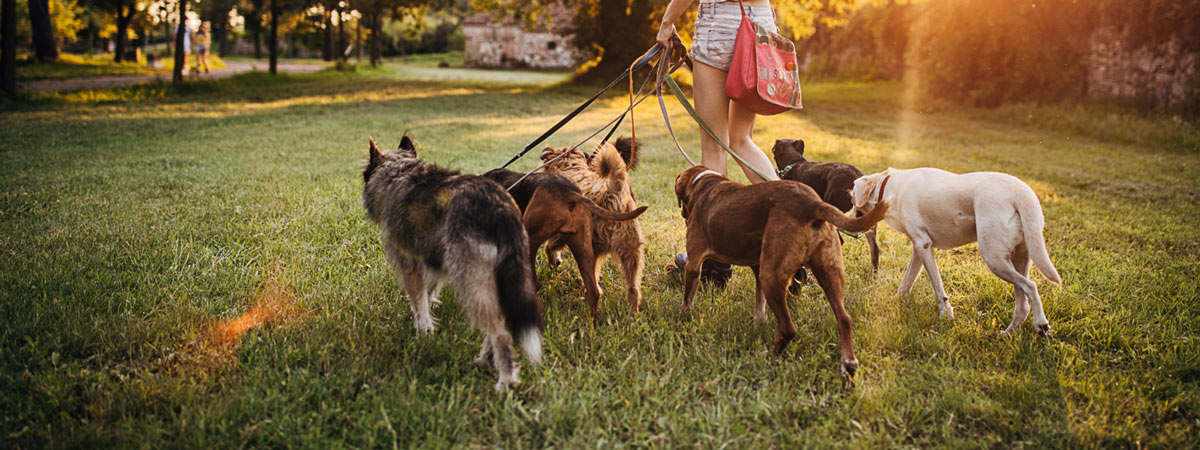
One of the biggest risks is not dog walking itself, but dog walking without behaviour knowledge.
A dog walker who lacks an understanding of canine body language and learning theory may unintentionally:
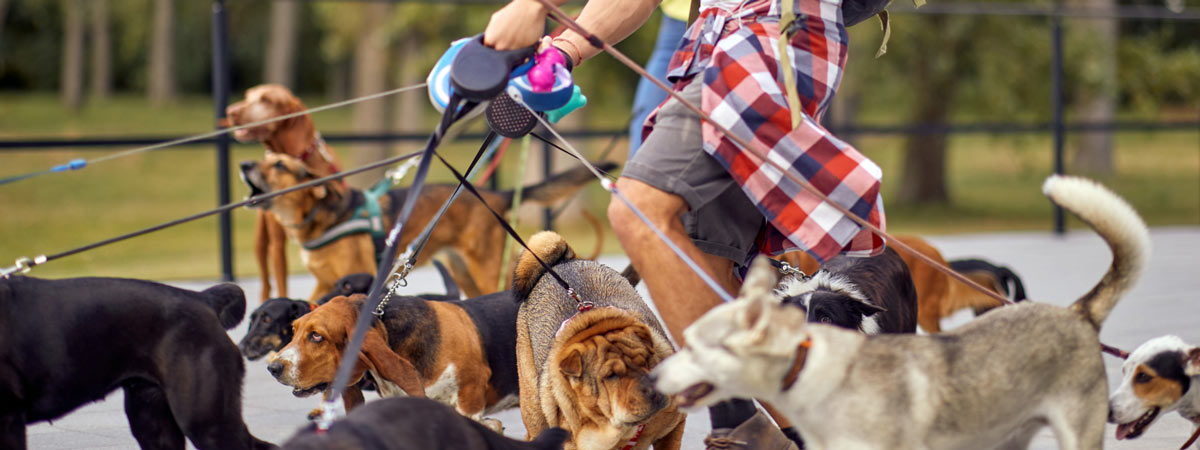
Force interactions between incompatible dogs
Punish or interrupt warning signals such as growling or avoidance
Miss early signs of stress or escalation
Apply outdated ideas around dominance or “pack behaviour”
These experiences can have lasting consequences, including:
Increased anxiety or reactivity
Suppression of communication signals
Escalation to more serious behaviour later on
From a behaviourist’s perspective, this is one of the most common contributors to “sudden” behaviour problems.
The Hidden Impact on Training and Behaviour
Dogs learn through repetition. Even a few poorly managed walks each week can undo careful training work.
Common fallout from unsuitable walking setups includes:
Reinforced leash pulling
Increased reactivity toward dogs or people
Over-arousal and poor emotional regulation
Reduced ability to disengage from triggers
If a dog is repeatedly rehearsing stressed or reactive behaviour, that behaviour becomes more ingrained, not resolved.
Does a Dog Actually Need a Dog Walker?
This is often the most surprising part for guardians:
Dogs do not universally need daily walks to have good welfare.
In many cases, dogs benefit more from:
Sniff-based enrichment and choice
Calm, structured interactions
Food enrichment and problem-solving
Short, low-stress walks rather than long, stimulating ones
Adequate rest and decompression
For anxious, reactive, adolescent, or sensitive dogs, less walking – or different walking – can significantly improve behaviour.
Movement is important, but emotional safety matters more.
When a Dog Walker Can Be the Right Choice
A dog walker can be a positive addition when they:
Understand canine body language and stress signals
Walk dogs individually or in carefully matched pairs
Use reward-based, force-free handling
Respect a dog’s need for space, choice, and pacing
Communicate clearly about any behavioural observations
In these situations, walking can support behavioural health rather than compromise it.
Dog Walker: Yay or Nay?
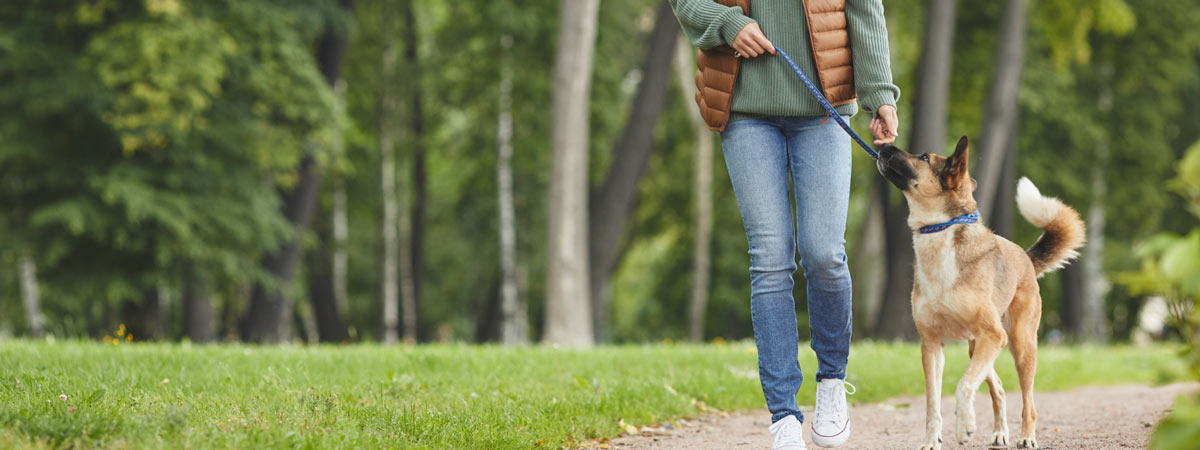
Yay – when the dog enjoys the experience and the walker understands behaviour.
Nay – when walks increase stress, overwhelm, or behavioural fallout.